Clash of the Cans: How Street Art Beef Keeps the Culture Honest
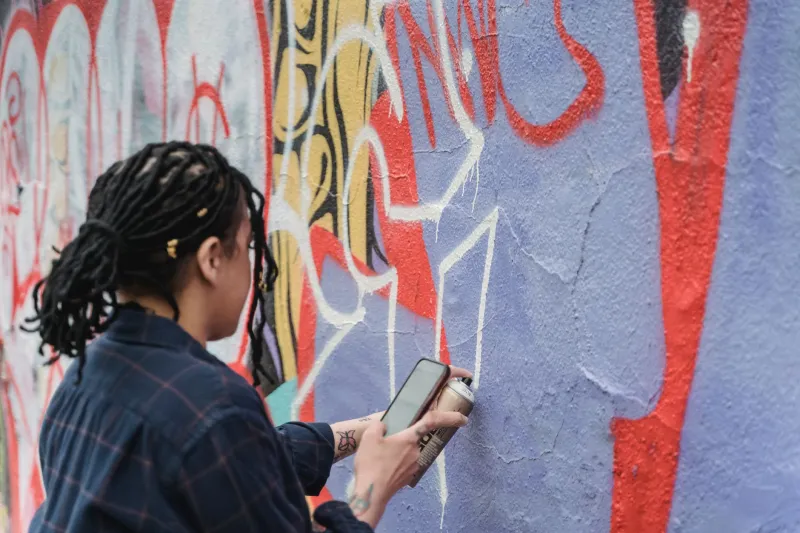
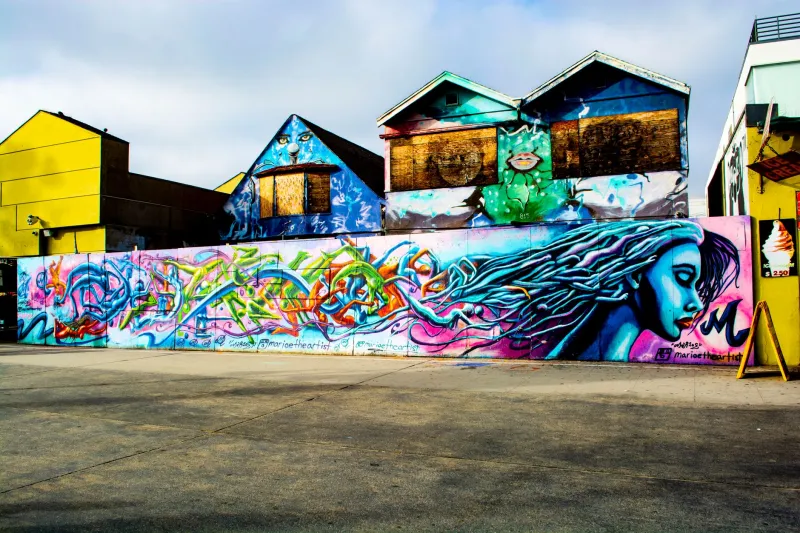
If you've spent any real time paying attention to the walls in your city, you've probably noticed it: a fresh throw-up slapped directly over someone else's piece. A tag bleeding into the border of a mural that took three days to finish. A name crossed out with a single brutal line. To the uninitiated, it reads like vandalism on top of vandalism—pointless destruction. But to anyone who actually moves in street art circles, that overlap tells a story. It's a conversation, a challenge, sometimes a war. And more often than not, it's exactly what pushes the art form forward.
Street art has always had an adversarial streak baked into its DNA. You can't separate the culture from its competitive roots. The whole thing grew out of environments where resources were scarce, recognition was everything, and the only way to prove your worth was to go harder than the person before you. That pressure didn't disappear when the medium got gallery shows and Instagram accounts. It just mutated.
Walls as Battlegrounds, Not Just Canvases
Let's be real about what a deliberate overlay communicates. When one artist goes over another's work, they're not just covering paint—they're making a statement about hierarchy, respect, and territory. In the graffiti tradition, the rules around this are surprisingly codified. Going over a toy (an inexperienced writer) is generally accepted. Going over a legend without serious skill to back it up? That's a declaration of war.
These unwritten rules create a kind of self-regulating ecosystem. The stakes are real. If you're going to step to someone on their own turf, your work better be undeniable. That pressure to actually be better has driven more stylistic evolution than any arts grant or gallery residency ever could. Writers push their letterforms to new extremes, develop signature styles that are impossible to bite, and invest in technical skills that make their pieces harder to dismiss.
It's the same logic that gave us some of hip-hop's greatest music. Nas and Jay-Z's back-and-forth in the early 2000s produced "Ether" and "The Takeover"—two of the most technically sharp diss tracks ever recorded. Neither artist would have reached that level without someone worth going at. Competition sharpens the knife.
Famous Feuds That Moved the Culture
The street art world has its own legendary beefs, though they don't always get the mainstream coverage of music industry drama. The ongoing tension between graffiti traditionalists and what purists call "street artists"—folks who came up through fine art channels rather than writing crews—has produced some genuinely explosive creative moments.
Banksy's rise in the early 2000s didn't happen in a vacuum. The Bristol-born artist's stencil work was partly a response to, and provocation of, the established writing community. Old-school writers dismissed stenciling as a shortcut. Banksy leaned into the criticism and turned accessibility into a political statement. That friction gave his early work an edge that slick gallery prep never would have.
Closer to home, cities like New York, Los Angeles, and Chicago have all had their own localized beef cycles. In New York, the battle for prime real estate on the Bowery mural walls has created an informal competition where artists know their work might get buffed or overlaid by someone else within weeks. Rather than discouraging participation, that impermanence pushes artists to make work so striking that the community rallies to protect it.
The Role of Disrespect in Driving Innovation
Here's a counterintuitive truth that experienced artists will tell you: being disrespected on the street is one of the fastest ways to level up. When someone goes over your piece, you have two options. You can walk away, or you can come back harder. Most serious artists choose the latter.
That cycle of challenge and response is a compressed version of how all art movements develop. The Impressionists were mocked by the establishment and responded by doubling down on everything the critics hated. Punk emerged partly as a sneer at arena rock excess. When the culture tells you that you're not good enough, some artists fold—and some of them make the most important work of their careers.
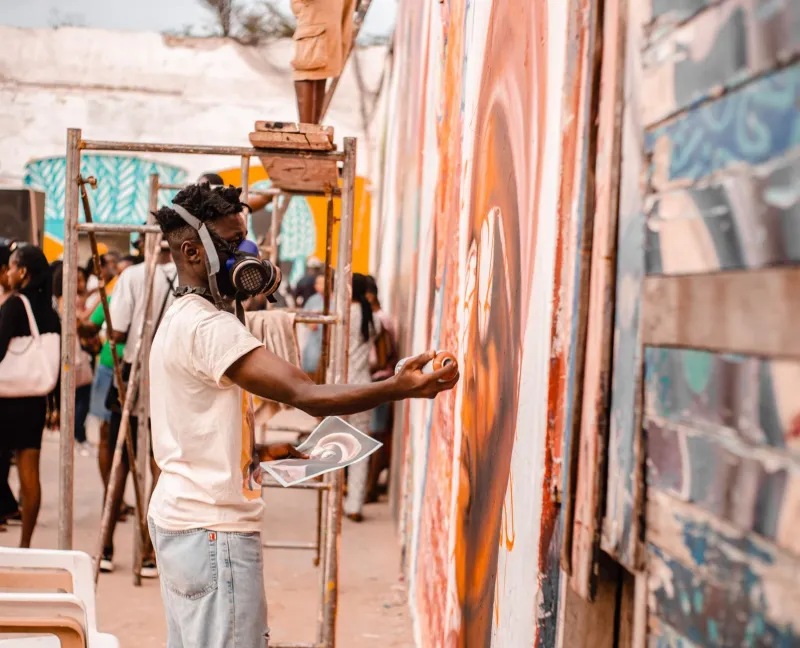
Several working artists we spoke with in cities across the country echoed this. One muralist based in Philadelphia described getting crossed out early in their career as "the most motivating thing that ever happened" to them. Another writer from Chicago talked about how crew rivalries in their neighborhood pushed everyone in the scene to develop more distinctive styles, because biting someone's technique when they could walk around the corner and see your work was social suicide.
When Beef Goes Wrong
None of this is to romanticize conflict for its own sake. There's a version of street art beef that slides from creative competition into something uglier—harassment, destruction of community murals that took real organizing to produce, or territorial behavior that shuts out artists from marginalized communities who are already working against the odds.
The line between productive rivalry and destructive gatekeeping matters. A callout that pushes both artists to grow is one thing. Using the unwritten rules of the culture as a weapon to protect the dominance of one demographic over others is something else entirely. The most vibrant street art scenes in the country tend to be the ones where competition is fierce but the floor is open—where going over someone's work is understood as a challenge to be answered, not a tool to silence people.
Community murals also occupy a different category. Work that was commissioned by a neighborhood, painted with local input, and represents the identity of a specific block carries a kind of social contract that purely personal pieces don't. Even in the most competitive scenes, crossing out a community mural tends to be understood as crossing a line.
Competition as Preservation
There's something almost paradoxical about the way rivalry preserves street art culture. You'd think that artists constantly threatening each other's work would lead to instability, burnout, and decline. Instead, the scenes that have maintained the most creative energy over decades are often the ones with the most active internal competition.
The reason is simple: complacency kills art movements. When everyone agrees that the work being produced is good enough, the incentive to push further disappears. Beef—real, genuine creative rivalry—is the antidote to that comfort. It keeps artists hungry, technically sharp, and culturally engaged.
The streets have always known this. Long before anyone was writing think-pieces about it, the walls were having the argument themselves—one overlay at a time.
Next time you walk past a piece that's been hit, don't just see the damage. Read it like the opening line of a conversation. Because somewhere out there, the response is already being planned.