Likes, Algorithms, and Aerosol: Has the Gram Hijacked Street Art's Soul?
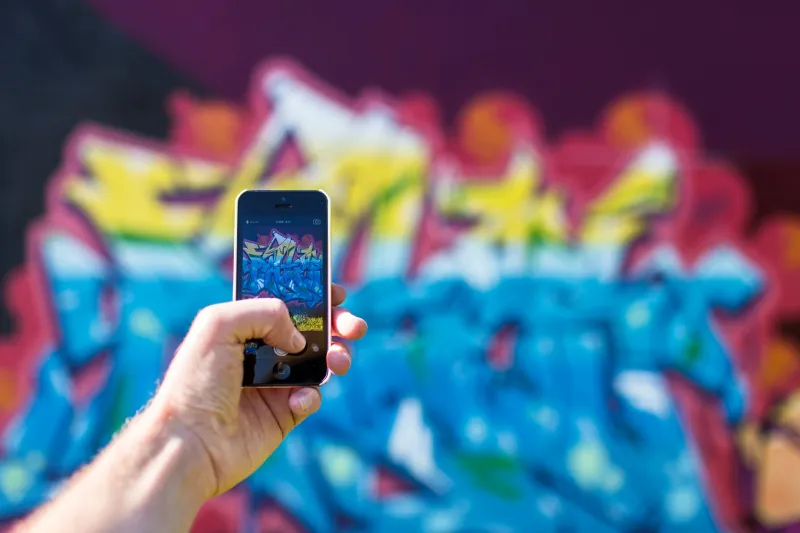
There's a mural in Wynwood, Miami that gets photographed roughly 400 times a day. On a Tuesday. The artist who painted it hasn't been back to the neighborhood since the opening weekend. The wall isn't a statement anymore — it's a backdrop. A prop. A location pin.
That shift, subtle but seismic, is happening in cities across the country. Street art — born in the defiant margins of urban life, from Philadelphia train yards to the South Bronx — is increasingly being shaped not by what an artist needs to say, but by what a platform's algorithm is willing to amplify. And the consequences ripple way beyond aesthetics.
The Double-Edged Spray Can
Let's be honest: social media did something genuinely powerful for street art. Before Instagram, your reach was your neighborhood. Maybe a zine. Maybe a grainy photo on a message board if you were lucky. Now, a mural in Albuquerque can land on someone's explore page in Portland the same afternoon it dries.
For artists coming up without gallery connections or institutional backing, that visibility is life-changing. Tanya Reyes, a muralist based in East Los Angeles who started painting in her early twenties, describes Instagram as "the first time I felt like my work existed beyond the block." Within a year of posting consistently, she had her first commissioned project — a community center in Boyle Heights wanted a piece specifically because they'd seen her feed.
That's the democratization story, and it's real. But it's also incomplete.
Because the same platform that surfaced Tanya also quietly started teaching her what to paint. "I noticed my more graphic, high-contrast stuff got way more engagement," she says. "Subtler work, stuff with more texture and story, kind of disappeared. After a while you start second-guessing yourself. Like, is this piece too complicated for a photo?"
That question — is this too complicated for a photo? — might be the most damaging thing the algorithm has introduced into street art culture.
Murals Built for the Camera
Walk through any heavily photographed arts district in America right now — the RiNo neighborhood in Denver, Houston's East End, Detroit's Eastern Market — and you'll spot a new genre of wall. Bright, flat colors. Minimal detail. Huge, legible text. A focal point perfectly centered for a portrait-mode shot. These aren't bad murals, necessarily. But they're designed with a secondary audience in mind: the phone lens.
"There's a whole category of public art now that I think of as 'mural-flavored content,'" says Marcus Webb, a veteran aerosol artist out of Chicago who's been active since the late '90s. "It's made to be consumed as a thumbnail. You lose the craftsmanship, the layering, the stuff that only rewards you if you stand in front of it for ten minutes."
Marcus isn't anti-social media — he uses it himself — but he's watched younger artists in his city make explicit choices to simplify their work after noticing engagement patterns. One told him, without irony, that he was "optimizing his style." Marcus laughs telling the story, but there's something genuinely melancholy underneath it.
The pressure doesn't just affect visual choices. It affects subject matter too. Controversial work — art that challenges, that makes people uncomfortable, that doesn't resolve into a clean caption — tends to underperform online. The result is a soft but real censorship of difficulty. Street art historically thrived on being inconvenient. Algorithms prefer content that goes down smooth.
Who Decides Which Walls Get Painted?
Here's where this gets politically thorny. Social media hasn't just changed what gets painted — it's changed where and for whom.
Business improvement districts, city arts commissions, and private property owners increasingly scout artists through Instagram. Follower count functions as a kind of informal credential. An artist with 80,000 followers and a cohesive aesthetic grid will get the call before a technically superior muralist with 2,000 followers and an inconsistent posting schedule.
The downstream effect: murals cluster in neighborhoods that are already visible, already being photographed, already attracting foot traffic from people who share content. Which, more often than not, means neighborhoods undergoing gentrification. The art follows the audience, and the audience follows the algorithm.
Community organizer and arts advocate Priya Nair, who works with low-income neighborhoods in the South Side of Chicago, has watched this pattern play out up close. "The murals go up in the spots where developers want to signal creative energy," she says. "Meanwhile, communities that have been doing grassroots public art for decades — without the Instagram presence — can't get funded. They can't even get noticed."
This isn't the fault of individual artists chasing opportunities. It's a structural problem that platforms and the institutions that defer to them have created. But it's worth naming clearly: algorithmic visibility is actively shaping urban geography in ways that mostly benefit already-advantaged spaces.
TikTok Enters the Wall
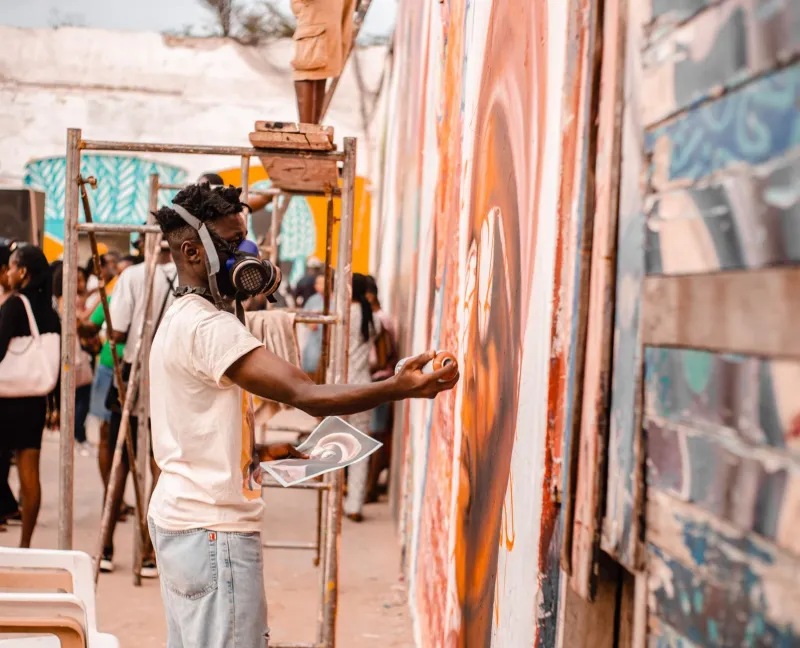
If Instagram changed the aesthetics of street art, TikTok is changing the process. Time-lapse videos of murals going up — artist in the frame, music synced, satisfying progression from blank wall to finished piece — routinely rack up millions of views. The performance of making art has become as marketable as the art itself.
For some artists, that's genuinely freeing. It builds audience connection, demystifies craft, and creates income streams through brand partnerships that fund work they couldn't otherwise afford. For others, it introduces a strange self-consciousness into the studio (or the alley). "I caught myself thinking about camera angles while I was on the lift," admits one Brooklyn-based muralist who asked to remain anonymous. "That's not where your head should be at 30 feet up."
The parasocial dimension matters too. Artists who build large TikTok audiences develop relationships with followers who feel invested in their work — which sounds positive until a piece underperforms and the comment section becomes a focus group nobody asked for.
Finding Ground in the Feed
None of this means social media is the enemy. The artists navigating it best seem to be the ones who've made deliberate decisions about what they share and what they don't — who treat the platforms as tools rather than arbiters.
Tanya Reyes, for her part, has started keeping a parallel body of work entirely off social media. Smaller pieces, more personal, painted in spots that won't generate foot traffic. "That work keeps me honest," she says. "It reminds me why I started."
Marcus Webb has gone the opposite direction — leaning into long-form video content that documents his process in real depth, betting that there's an audience willing to slow down with him. Early results are promising.
What both approaches share is intentionality. A refusal to let the feed set the terms.
Street art has always been in conversation with its environment — responding to power, to place, to the specific texture of a city block at a specific moment. The question right now is whether the environment that matters most is the wall in front of you, or the screen in everyone's pocket. The answer, increasingly, is that artists have to choose. And that choice is a political act.
The streets still speak. The question is whether we've started letting the algorithm write the script.