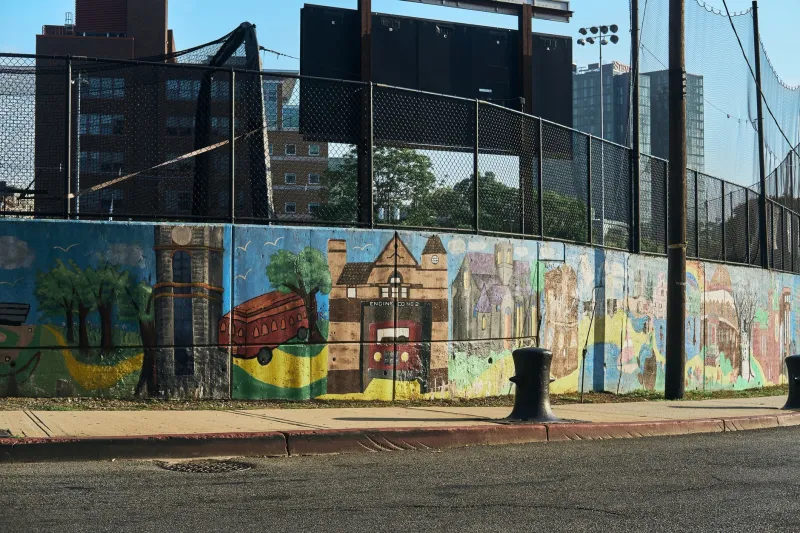
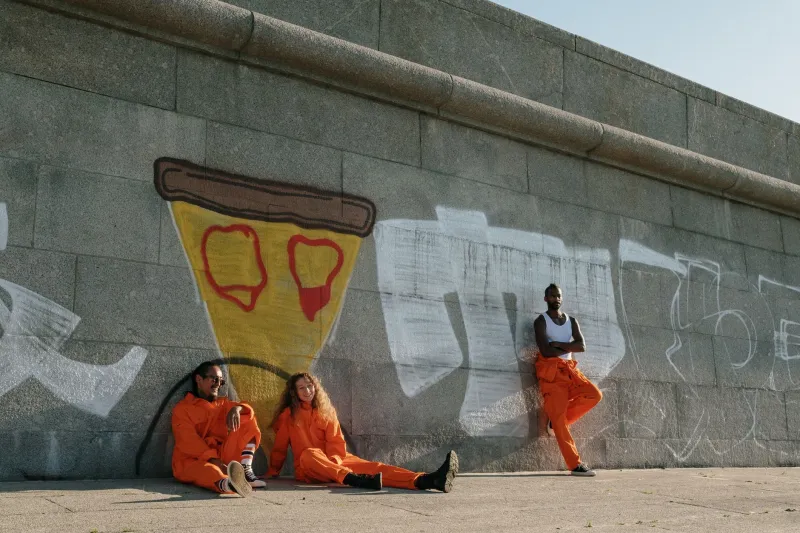
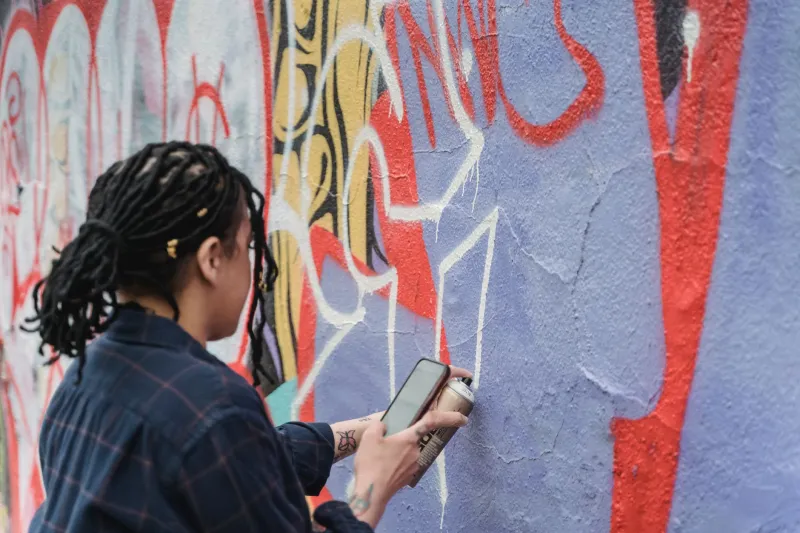
Gone Overnight: The War on Walls and the People Fighting to Keep Them Standing
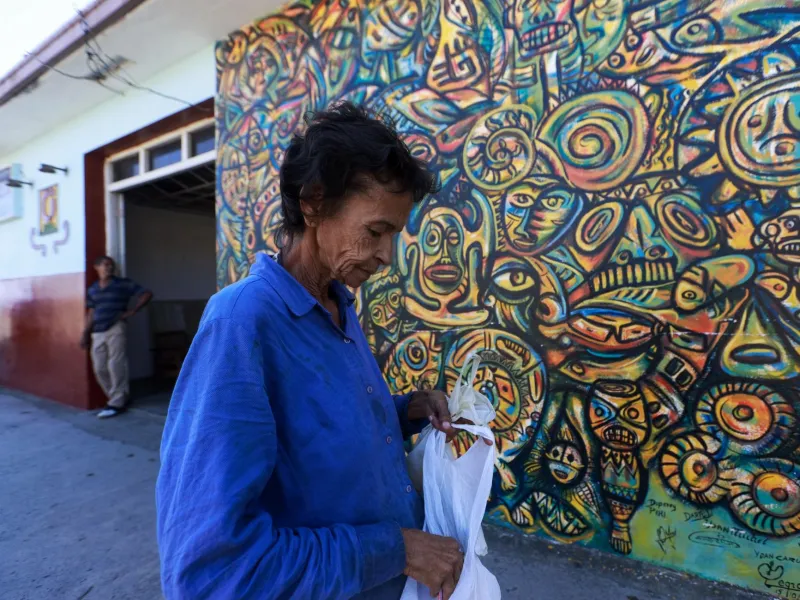
It happens fast. An artist spends weeks on a piece — sketching, sourcing paint, climbing scaffolding at odd hours, negotiating with building owners — and then one Tuesday morning a city maintenance truck rolls up. By noon, the wall is gray. The mural is gone. The neighborhood loses something it didn't even know it needed until the moment it disappeared.
This is the buff. And if you've spent any real time paying attention to street art in American cities, you've watched it happen more times than you can count.
What Is Buffing, Really?
The term "buffing" in street art culture refers to the act of covering or removing art from a surface — whether that's a city crew painting over a mural with a flat coat, a property owner pressure-washing a piece off their wall, or even a rival artist slapping their own tag on top of someone else's work. The end result is the same: erasure.
For city governments, buffing is usually framed as maintenance. Anti-graffiti ordinances in cities like Los Angeles, Chicago, and Philadelphia require property owners to remove unauthorized markings within a set timeframe — sometimes as short as 72 hours — or face fines. The logic, rooted in broken windows theory, is that visible graffiti signals disorder and invites more of it. Clean it up fast, the thinking goes, and you keep neighborhoods from sliding.
But here's the problem with that logic: it doesn't distinguish between a gang tag and a 40-foot masterpiece that took a team of artists three weeks to complete. To a city maintenance crew working off a complaint ticket, a wall is a wall.
"We had a piece up in Pilsen for almost two years," says Marcus Reyes, a Chicago-based muralist who has worked across the Midwest for over a decade. "It was community-approved, neighbors loved it, kids took school field trips to see it. Then someone filed a complaint — probably someone who moved in six months ago and didn't know the history — and the city buffed it inside a week. No notice. No conversation. Just gone."
Who's Doing the Erasing?
City crews are the most visible culprits, but they're far from the only ones. Property ownership changes hands constantly in rapidly gentrifying neighborhoods, and new landlords often see existing murals as liabilities rather than assets. Insurance concerns, aesthetic preferences, or simply a desire to signal a "fresh start" can motivate an owner to whitewash a wall that the surrounding community had come to treat as a landmark.
There's also the internal politics of street art itself. The culture has always had a competitive, territorial dimension. Tags get crossed out. Pieces get gone over. It's been part of the ecosystem since the beginning. But as muralism has grown more visible and more tied to neighborhood identity, these internal erasures carry heavier consequences than they once did.
And then there are the subtler forces — developers who see a colorful wall as an obstacle to a sleek new facade, business improvement districts that prefer a "unified aesthetic," or local politicians trying to signal toughness on quality-of-life issues before an election cycle.
"The buff is never just about paint," says Dr. Alicia Fontaine, a cultural geographer at Rutgers who studies public art and urban policy. "It's about who gets to decide what a neighborhood looks like, whose history gets preserved, and whose expression is treated as noise."
The Documentation Movement
Faced with the reality that walls are temporary, a growing network of artists, archivists, and community organizations has shifted some of its energy toward documentation — capturing threatened pieces before they vanish.
Groups like the Mural Arts Program in Philadelphia and the Welling Court Mural Project in Queens have built substantial archives of street art, but the real movement is happening at the grassroots level. Artists and community members are using everything from DSLR cameras to LiDAR scanning to create detailed records of murals in vulnerable areas. Some are even partnering with local universities to build searchable public databases.
In Los Angeles, a volunteer collective called Save the Wall LA has been photographing murals in historically Latino neighborhoods where development pressure is intense, then working with cultural heritage organizations to get significant pieces officially recognized as landmarks — a designation that adds legal friction to the buffing process.
"Documentation isn't enough by itself," admits Jess Corrales, one of the collective's founding members. "But it matters. If we can prove a mural has cultural and historical significance, we have something to bring to a city council hearing. We have something to put in front of a developer. It changes the conversation."
Legal Protections — and Their Limits
The Visual Artists Rights Act of 1990 technically offers some protection to murals created by recognized artists, giving them the right to prevent destruction of their work under certain conditions. But VARA is notoriously difficult to enforce, requires the artist to have a specific kind of recognized status, and doesn't apply to works created without the property owner's permission — which covers a huge swath of street art.
Some cities have started experimenting with their own local protections. San Francisco's Planning Department includes murals in its historic preservation review process in certain districts. Denver has a public art registry that can flag significant pieces for protection before demolition or renovation projects begin. These are real steps, but they're patchwork solutions in a country where property rights almost always win the argument.
What advocates are increasingly pushing for is a more proactive model — one where communities have formal input before murals are removed, not after. Several cities are piloting notification requirements that would mandate a waiting period and public comment before any mural over a certain size can be buffed from a publicly visible wall.
What Neighborhoods Can Actually Do
Beyond policy fights, communities have found practical tools that work right now. Formalizing the relationship between artists and property owners through written agreements — even simple ones — creates a paper trail that makes casual buffing more complicated. Neighborhood arts councils that maintain relationships with both artists and property owners can serve as early warning systems when a wall is threatened.
Social media has also changed the stakes. When a beloved mural gets buffed, the story can spread fast, creating public pressure that city officials and property owners increasingly can't ignore. The court of public opinion doesn't always win, but it wins more often than it used to.
And there's something to be said for the power of showing up. Marcus Reyes, the Chicago muralist, has started hosting community events around his new pieces — block parties, school programs, neighborhood cleanups — specifically to build the kind of local attachment that makes buffing politically costly.
"If people feel like a mural belongs to them, they'll fight for it," he says. "And that's the whole point, right? The wall should belong to the neighborhood. Not to me, not to the city, not to whoever owns the building. To the people who live there."
The Walls Remember
There's a reason Down Street Art exists. There's a reason people stop mid-commute to photograph a mural, or walk an extra three blocks to show a friend a piece they love. Street art does something that very few other art forms can — it inserts beauty and meaning directly into the daily life of people who never asked for it and might not have sought it out on their own.
When that gets buffed away, it's not just a wall that goes gray. It's a small piece of a neighborhood's sense of itself. The preservation movement happening right now across American cities is about a lot of things — artists' rights, cultural heritage, community power. But at its core, it's about something simpler: the idea that beauty on a wall belongs to the street it faces, and the street deserves a say in whether it stays.